
4 11 月, 2026 • 4 min read
How to Bend High-Strength Steel Without Cracking on a Press Brake
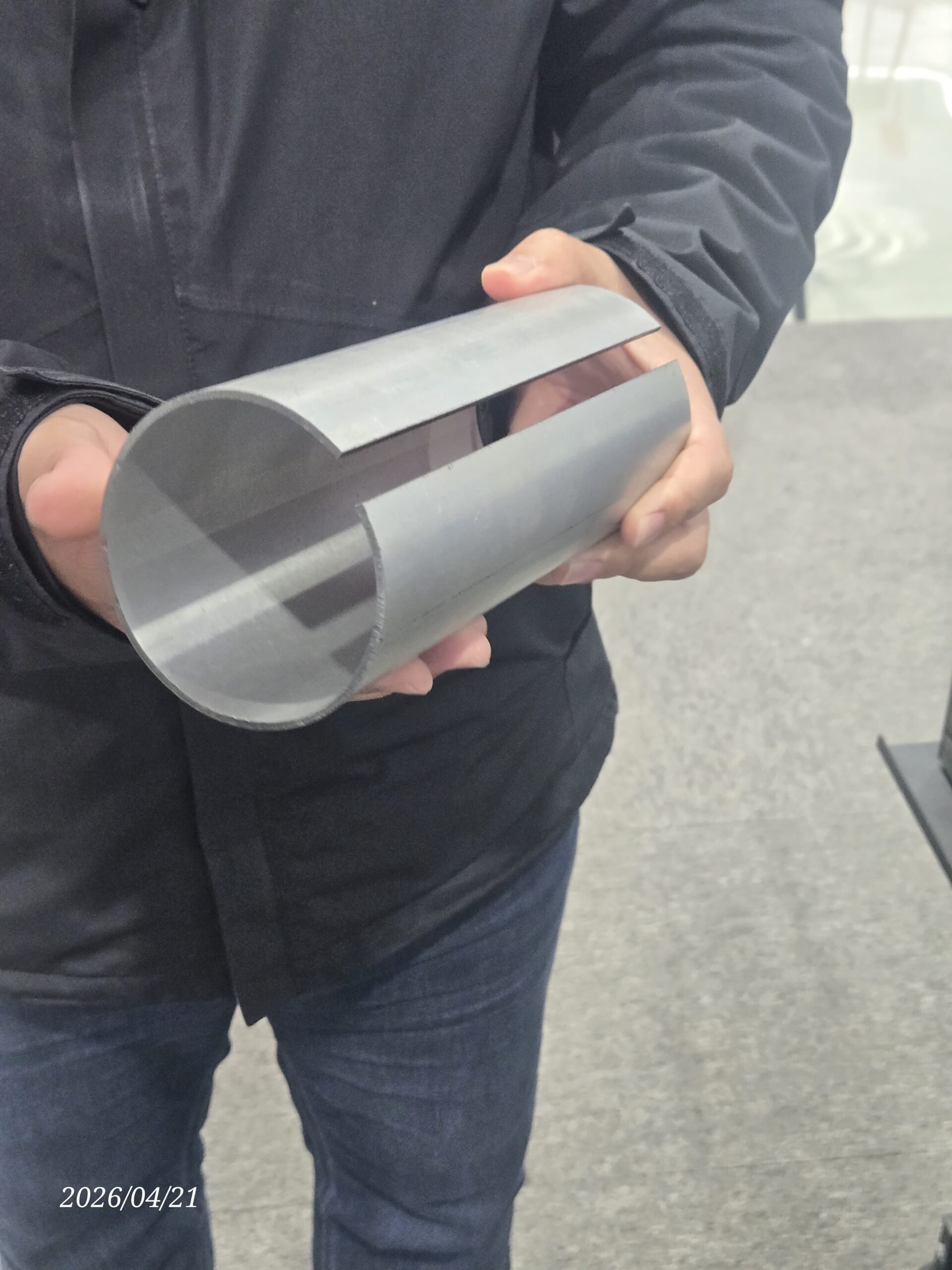
How to bend high-strength steel without cracking is a common engineering challenge for manufacturers producing structural components, machinery parts, and transportation equipment.
High-strength low-alloy (HSLA) steels offer a useful combination of mechanical strength and potential weight savings. However, their bending behavior depends on the specific steel grade, tensile strength, ductility, material thickness, and forming conditions.
Compared with conventional mild steel, certain high-strength grades may require larger minimum bend radii, higher bending forces, and more careful springback compensation.
Successful press brake bending therefore begins with understanding the material's forming limitations and selecting suitable tooling, bend orientation, and process parameters.
This guide explains the main causes of cracking during high-strength steel bending and the practical steps manufacturers can take to improve bending quality.
Why Does High-Strength Steel Crack During Bending?
Cracking occurs when the local tensile strain during bending exceeds the material's available formability.
During bending, the outer surface of the sheet stretches while the inner surface experiences compression.
If the bend radius is too small, tensile strain becomes concentrated along the outside of the bend.
High-strength steels may have lower available ductility than conventional mild steel, depending on grade and processing history.
The risk increases when unfavorable grain direction, poor edge quality, or unsuitable tooling is involved.
1. Select the Correct Minimum Bend Radius
Minimum bend radius is one of the most important parameters for high-strength steel.
A bend radius that works for mild steel may not be suitable for a higher-strength material.
Manufacturers often express minimum inside radius as a multiple of material thickness.
For example:
R = k × t
Where:
- R = inside bend radius
- t = material thickness
- k = material-specific radius factor
The factor must come from the relevant material specification or validated forming data.
There is no universal radius multiplier suitable for every HSLA grade.
For example, a manufacturer may specify different minimum radii for 700 MPa and 960 MPa-class steels.
Using a smaller radius than recommended increases the risk of cracking.
2. Consider the Rolling Direction
Sheet and plate materials develop directional characteristics during rolling.
Depending on the material, bending performance may differ when the bend line is parallel or perpendicular to the rolling direction.
For many high-strength steel grades, bending with the bend line perpendicular to the rolling direction can provide better bendability.
However, the exact requirement depends on the material grade.
When preparing the cutting layout, manufacturers should consider rolling direction before nesting the parts.
Ignoring this relationship can create inconsistent bending results even when all machine parameters remain unchanged.
3. Inspect Cut Edges Before Bending
Cut-edge quality is especially important for high-strength steel.
Laser cutting, shearing, and other cutting processes can leave surface irregularities or edge defects.
These defects can act as crack initiation points during bending.
The risk becomes greater when a cut edge crosses a highly strained bending region.
Recommended preparation may include:
- Removing burrs
- Rounding sharp edges
- Inspecting visible edge defects
- Avoiding unnecessary scratches
- Following material-specific edge preparation requirements
The appropriate preparation depends on the cutting method, material, and finished-part requirements.
4. Use Suitable Punch and Die Geometry
Tooling selection directly influences bending strain and required force.
A punch with an excessively small radius can create high localized strain.
The lower die opening also affects the bending process.
For many high-strength steel applications, a larger V-opening can reduce bending force.
However, the final inside radius and bending behavior must be evaluated using the material manufacturer's recommendations.
Tooling should have sufficient strength and rated capacity for the application.
Worn or damaged tools can create additional surface defects and inconsistent results.
5. Understand Springback
High-strength steels often exhibit greater springback than conventional mild steel.
Springback occurs when elastic deformation partially recovers after the bending load is removed.
This means the programmed bending angle may differ significantly from the finished angle.
For example, a component requiring a final 90-degree bend may need to be formed beyond that angle.
The required compensation depends on material grade, thickness, bend radius, and tooling.
There is no reliable universal springback angle.
Manufacturers should use material-specific data and verify the process through test bending.
6. Calculate Bending Force Correctly
Higher material strength generally increases the force required for a comparable bending operation.
However, bending force also depends on thickness, bend length, and die opening.
A larger die opening may reduce the required force, but it must remain compatible with the specified bend radius and flange geometry.
Before processing high-strength steel, confirm:
- Required bending force
- Machine tonnage capacity
- Tooling load limits
- Permissible load distribution
- Workpiece support requirements
Exceeding the machine or tooling capacity can create serious safety risks.
7. Avoid Inappropriate Bottom Bending
Air bending is often preferable for high-strength steel because it allows the forming process to be controlled without forcing the material fully into the bottom of the die.
Bottom bending can introduce substantially higher forces and may increase cracking or tooling risks when unsuitable parameters are used.
The bending method should follow the material manufacturer's guidance and the machine's operating limits.
A Practical Preparation Checklist
Before bending HSLA steel, verify:
- Exact steel grade and material certificate.
- Material thickness and tolerances.
- Rolling direction.
- Minimum recommended inside radius.
- Cut-edge condition.
- Punch and die compatibility.
- Calculated bending force.
- Springback compensation.
- First-piece inspection requirements.
For critical components, representative bending trials should be completed before full production.
What Should Equipment Buyers Consider?
Manufacturers regularly processing high-strength steel should evaluate press brake rigidity, usable tonnage, tooling compatibility, CNC compensation capability, and technical support.
The correct machine should be selected from the actual material grades and workpiece dimensions rather than nominal thickness alone.
KLD Machinery approaches press brake configuration through application requirements, helping manufacturers evaluate bending capacity, tooling, and process flexibility for different steel grades.
Frequently Asked Questions
Can HSLA steel be bent on a conventional CNC press brake?
Yes, provided the machine, tooling, and bending parameters are suitable for the specific grade.
Why does high-strength steel crack at the outside of the bend?
The outer surface experiences tensile strain. Cracking can occur when the strain exceeds the material's available formability.
Does increasing the bend radius reduce cracking risk?
Generally yes, although the required radius depends on the material specification and forming conditions.
Is springback greater in high-strength steel?
Often yes. Springback must be evaluated using the actual grade, thickness, and tooling.
Conclusion
Successful high-strength steel bending depends on material-specific engineering rather than simply increasing press brake tonnage.
Correct bend radius, rolling direction, edge preparation, tooling geometry, and springback compensation are essential for reducing cracking risks and producing consistent components.
For More Details, Consult Your KLD Sheet Metal Solution Experts
We help you deliver the quality and value required for sheet metal processing equipment.
Consult Our Experts →