22 10 月, 2026 • 4 min read
Fiber Laser Cutting with Nitrogen vs. Oxygen: Which Assist Gas Should You Use?
Nitrogen vs. Oxygen in Fiber Laser Cutting: Which Is Better?
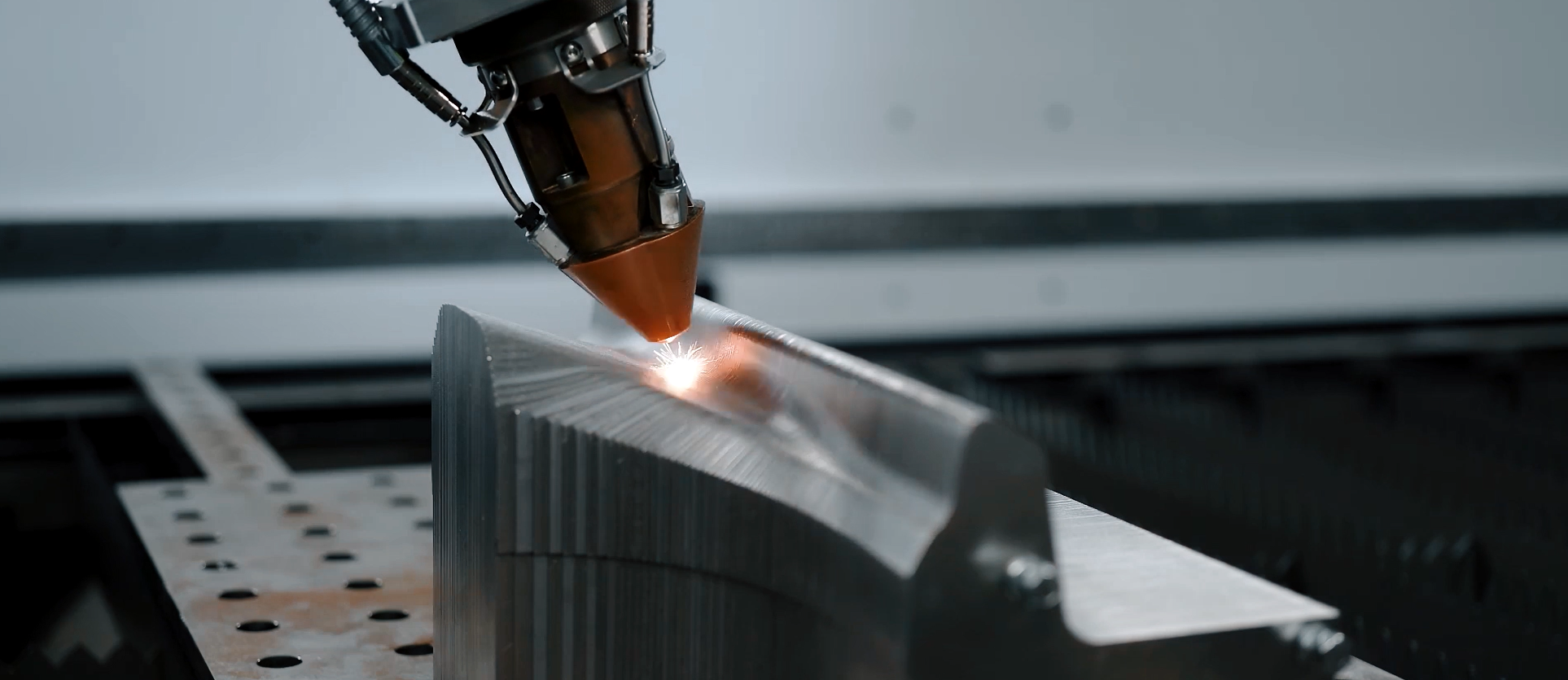
Nitrogen vs oxygen laser cutting is an important comparison for manufacturers seeking the right balance between cutting quality, processing speed, and operating cost.
Both gases are widely used in fiber laser cutting, but they perform different functions during the cutting process.
Oxygen supports an exothermic reaction when cutting suitable metals, particularly carbon steel. This additional heat can assist material removal, although the resulting cut edge typically develops an oxide layer.
Nitrogen primarily acts as a non-reactive assist gas, helping eject molten material while limiting oxidation of the cut edge. It is commonly selected when clean edges are important, particularly for stainless steel and certain aluminum applications.
However, neither gas is universally better.
The correct choice depends on material type, thickness, laser power, required edge quality, downstream finishing operations, and total operating cost.
This guide compares nitrogen and oxygen laser cutting and explains when each gas is most appropriate for industrial sheet metal fabrication.
What Does Assist Gas Do in Laser Cutting?
Assist gas helps remove molten material from the cutting kerf and influences the chemical condition of the cut edge.
Depending on the gas, it can also contribute additional heat through chemical reactions or protect the cutting area from oxidation.
The choice affects:
- Cut-edge appearance
- Oxidation
- Dross formation
- Cutting speed
- Gas consumption
- Downstream processing
- Operating cost
The best choice depends on the material and the required finished part.
How Does Oxygen Laser Cutting Work?
Oxygen-assisted cutting is commonly used for carbon steel.
During cutting, the laser heats the material while oxygen reacts with the hot metal.
This oxidation reaction releases additional heat, supporting the cutting process.
This method is commonly called flame cutting.
Advantages of Oxygen Cutting
Oxygen can be particularly useful when processing thicker carbon steel because the additional reaction energy supports material removal.
For suitable applications, it can provide effective cutting performance without requiring the same gas-flow conditions as nitrogen fusion cutting.
Limitations of Oxygen Cutting
The main disadvantage is oxidation.
Oxygen cutting typically produces an oxide layer on the cut edge.
Depending on the downstream application, this layer may need to be removed before coating, welding, or other processing.
The resulting edge appearance is also different from a bright nitrogen-cut edge.
How Does Nitrogen Laser Cutting Work?
Nitrogen-assisted laser cutting is generally a fusion-cutting process.
The laser supplies the energy required to melt the metal, while nitrogen helps eject molten material from the kerf.
Unlike oxygen, nitrogen does not intentionally support the cutting process through an oxidation reaction.
This makes nitrogen particularly useful when a clean, low-oxidation edge is required.
Advantages of Nitrogen Cutting
Nitrogen can provide:
- Bright metallic cut edges
- Reduced oxidation
- Good surface appearance
- Suitable cutting conditions for stainless steel
- Reduced need for oxide-removal operations
However, nitrogen cutting can still produce burrs or other defects if the process parameters are incorrect.
Limitations of Nitrogen Cutting
Nitrogen fusion cutting may require substantial gas flow and pressure, depending on the material, thickness, and machine configuration.
Gas supply can therefore become a significant operating expense.
For thicker materials, the available laser power and gas-delivery capacity must be considered carefully.
Nitrogen vs. Oxygen: Main Differences
| Factor | Nitrogen | Oxygen |
|---|---|---|
| Cutting mechanism | Fusion cutting | Oxidation-assisted cutting |
| Typical applications | Stainless steel, aluminum, selected steels | Carbon steel |
| Edge oxidation | Generally low | Oxide layer normally forms |
| Edge appearance | Often bright metallic | Often darker |
| Gas demand | Can be substantial | Process-dependent |
| Downstream finishing | May reduce oxide removal | May require oxide removal |
| Cutting speed | Depends on material and power | Benefits from reaction heat in suitable applications |
Neither gas is universally faster or cheaper.
Actual performance depends on the complete cutting process.
Which Gas Is Better for Mild Steel?
Oxygen is a common choice for carbon steel, particularly in thicker sections.
However, nitrogen can be attractive when the manufacturer requires a low-oxidation edge or wants to reduce certain downstream cleaning operations.
For example, a manufacturer producing painted electrical cabinets may compare both processes.
The correct decision should consider the cutting result, coating requirements, any necessary edge preparation, and the total cost per finished part.
A nitrogen-cut edge should not automatically be assumed ready for every coating or welding process. Qualification of the downstream process remains necessary.
Which Gas Is Better for Stainless Steel?
Nitrogen is generally preferred when a bright, low-oxidation edge is important.
This is especially relevant for:
- Commercial kitchen equipment
- Stainless steel enclosures
- Decorative panels
- Food-processing equipment
- Visible architectural components
The final quality still depends on material grade, thickness, gas purity, and cutting parameters.
What About Aluminum?
Nitrogen is also commonly used for aluminum cutting.
It can help produce relatively clean edges without intentionally introducing oxidation through the assist gas.
However, aluminum's thermal properties and alloy composition affect the cutting process.
The correct laser power, focus, nozzle, and gas settings must be validated for the actual material.
How Does Gas Selection Affect Operating Cost?
Gas cost should be evaluated per finished part, not simply per cylinder or cubic meter.
A useful calculation is:
Assist gas cost per part = gas flow × cutting time × gas unit cost
This calculation must use consistent units.
Manufacturers should also consider:
- Gas generation or delivery equipment
- Electricity
- Maintenance
- Cutting speed
- Scrap rate
- Secondary finishing
- Gas purity requirements
A gas with a higher purchase price may still be economical if it reduces downstream processing.
Conversely, an unnecessarily expensive gas supply can increase cost without improving the finished product.
What Should Buyers Check?
When evaluating a fiber laser cutting machine, ask suppliers to demonstrate representative materials using the intended assist gases.
Compare edge appearance, cutting time, gas consumption, and downstream processing requirements.
KLD Machinery considers material type, thickness, production requirements, and cutting quality when recommending fiber laser configurations and automation options.
Frequently Asked Questions
Is nitrogen always better than oxygen?
No. Nitrogen is useful for low-oxidation cutting, while oxygen can be advantageous for certain carbon-steel applications.
Why does oxygen cutting produce a dark edge?
The oxygen reacts with the heated metal and forms an oxide layer.
Can nitrogen cut mild steel?
Yes, provided the machine and cutting process are suitable for the material and thickness.
Which gas is cheaper?
The answer depends on gas supply cost, consumption, cutting time, and downstream processing.
Conclusion
Nitrogen and oxygen are different tools for different cutting requirements.
Manufacturers should select assist gas according to material, thickness, required edge quality, downstream operations, and total production cost rather than assuming one gas is always superior.
For More Details, Consult Your KLD Sheet Metal Solution Experts
We help you deliver the quality and value required for sheet metal processing equipment.
Consult Our Experts →