4 12 月, 2025 • 4 min read
What Is a Panel Bender? A Complete Guide to Automated Sheet Metal Bending
What Is a Panel Bender? A Complete Guide to Automated Sheet Metal Bending
Panel bending has become an increasingly important technology in modern sheet metal manufacturing, particularly for companies producing electrical cabinets, HVAC components, steel furniture, elevators, appliances, and other products made from repetitive sheet metal panels.
But what exactly is a panel bender, and how is it different from a conventional press brake?
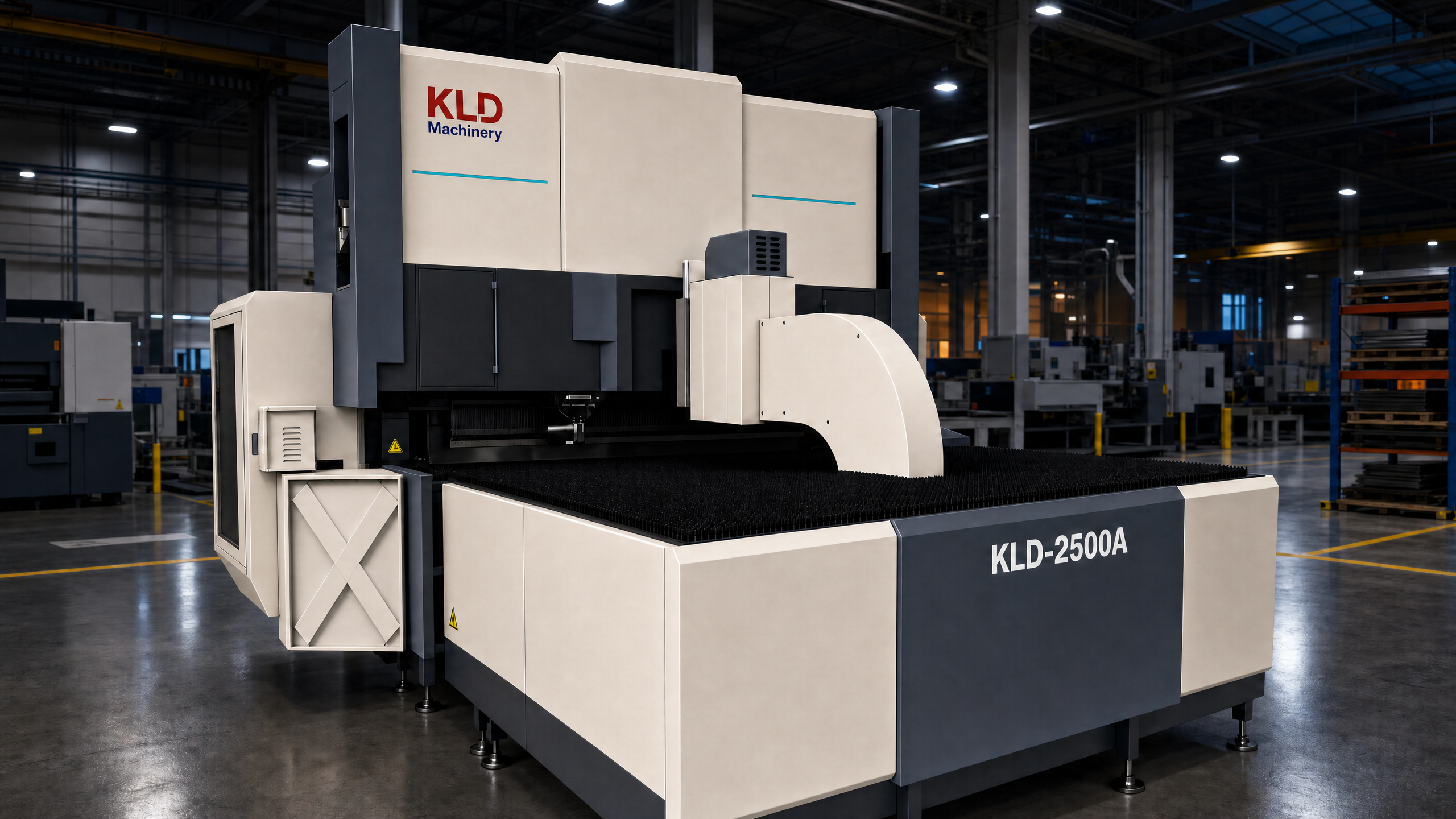
A panel bender is a sheet metal bending machine designed to efficiently form panels through automated positioning and bending operations. Unlike a traditional press brake, which normally uses a punch and die to form each bend, a panel bender uses dedicated forming tools and an automated process to bend selected edges of a sheet.
The result is a different approach to sheet metal production—one that places greater emphasis on automation, repeatability, and productivity.
How Does a Panel Bender Work?
A typical panel bending process begins with a flat sheet positioned on the machine's working area.
The machine automatically positions the sheet and then performs the required bending operations according to the programmed sequence.
Depending on the machine configuration, the process may include:
- Automatic sheet positioning
- Edge detection or positioning
- Upward and downward bending
- Automatic angle control
- Multi-side bending
- Finished-part handling
Because the workpiece can be repositioned automatically, the operator does not necessarily need to manually rotate and reposition the sheet for every bend.
This is particularly useful for panels requiring multiple bends around several sides.
Panel Bender vs. Press Brake
The two technologies serve overlapping but different production needs.
A conventional CNC press brake is extremely flexible. It can process many different shapes, materials, thicknesses, and bending configurations.
A panel bender is more specialized toward repetitive panel production.
In simple terms:
Press Brake: flexibility and versatility
Panel Bender: automation and productivity for suitable panel applications
Neither technology is universally better.
The right choice depends on the manufacturer's product mix.
What Are the Main Advantages of a Panel Bender?
1. Reduced Manual Handling
Large panels can be difficult to manually reposition during multi-bend operations.
Automated positioning can reduce repetitive physical handling and improve production consistency.
2. High Productivity
When a part requires several bends, a panel bender can perform multiple operations efficiently without requiring the same level of manual intervention as a conventional process.
3. Consistent Production
Automated positioning and programmed bending sequences can help reduce variations caused by manual handling.
4. Lower Operator Dependency
Operators can focus more on loading, unloading, inspection, setup, and production supervision instead of manually controlling every bending movement.
5. Suitable for Repetitive Parts
Panel benders are particularly attractive when the factory produces similar parts repeatedly.
What Industries Use Panel Benders?
Panel bending technology can be used in many industries.
Common applications include:
Electrical Cabinets
Cabinet panels often require multiple straight bends and repetitive production.
HVAC
Air-conditioning and ventilation components can contain large numbers of repetitive sheet metal panels.
Steel Furniture
Shelves, cabinets, drawers, and other furniture components can benefit from automated bending.
Elevators
Elevator components often involve large panels and repeatable bending operations.
Appliances
Certain appliance components can also be suitable for automated panel bending.
The key factor is not the industry itself, but the geometry and production characteristics of the parts.
When Should You Consider a Panel Bender?
A panel bender becomes particularly interesting when several of the following conditions exist:
- High production volume
- Repetitive panel geometry
- Multiple bends per part
- Large workpieces
- Significant manual handling
- Pressure to reduce cycle time
- Difficulty recruiting operators
- Need for consistent production
For low-volume, highly customized production, a CNC press brake may provide greater flexibility.
For repetitive production, however, the productivity benefits of a panel bender can become increasingly attractive.
What Should You Consider Before Buying?
Before purchasing a panel bending machine, manufacturers should analyze their actual production data.
Important factors include:
- Sheet dimensions
- Material types
- Material thickness
- Number of bends
- Bend direction
- Part geometry
- Production volume
- Required tolerances
- Loading and unloading method
- Future automation requirements
It is also important to test representative parts before making a final investment decision.
A machine that performs well on one simple panel may not necessarily be suitable for the complete product portfolio.
Panel Bending as Part of an Automated Factory
The greatest value of a panel bender may appear when it is connected to other production processes.
For example:
Sheet Storage → Laser Cutting → Material Handling → Panel Bending → Finished Part Handling
This creates a more connected sheet metal workflow and can reduce unnecessary manual transportation between processes.
KLD Machinery approaches panel bending from this system-level perspective, considering not only the bending machine but also material handling, production volume, automation requirements, and the customer's future manufacturing goals.
Conclusion
A panel bender is more than an alternative to a conventional press brake.
It represents a different production philosophy—one focused on automated handling, repeatable bending, and efficient production of suitable panel components.
For manufacturers producing repetitive sheet metal panels, understanding when to use panel bending can be an important step toward building a more efficient production system.
For More Details, Consult Your KLD Sheet Metal Solution Experts
We help you deliver the quality and value required for sheet metal processing equipment.
Consult Our Experts →