
9 10 月, 2026 • 4 min read
How to Calculate Press Brake Tonnage: Formula, Examples and Common Mistakes
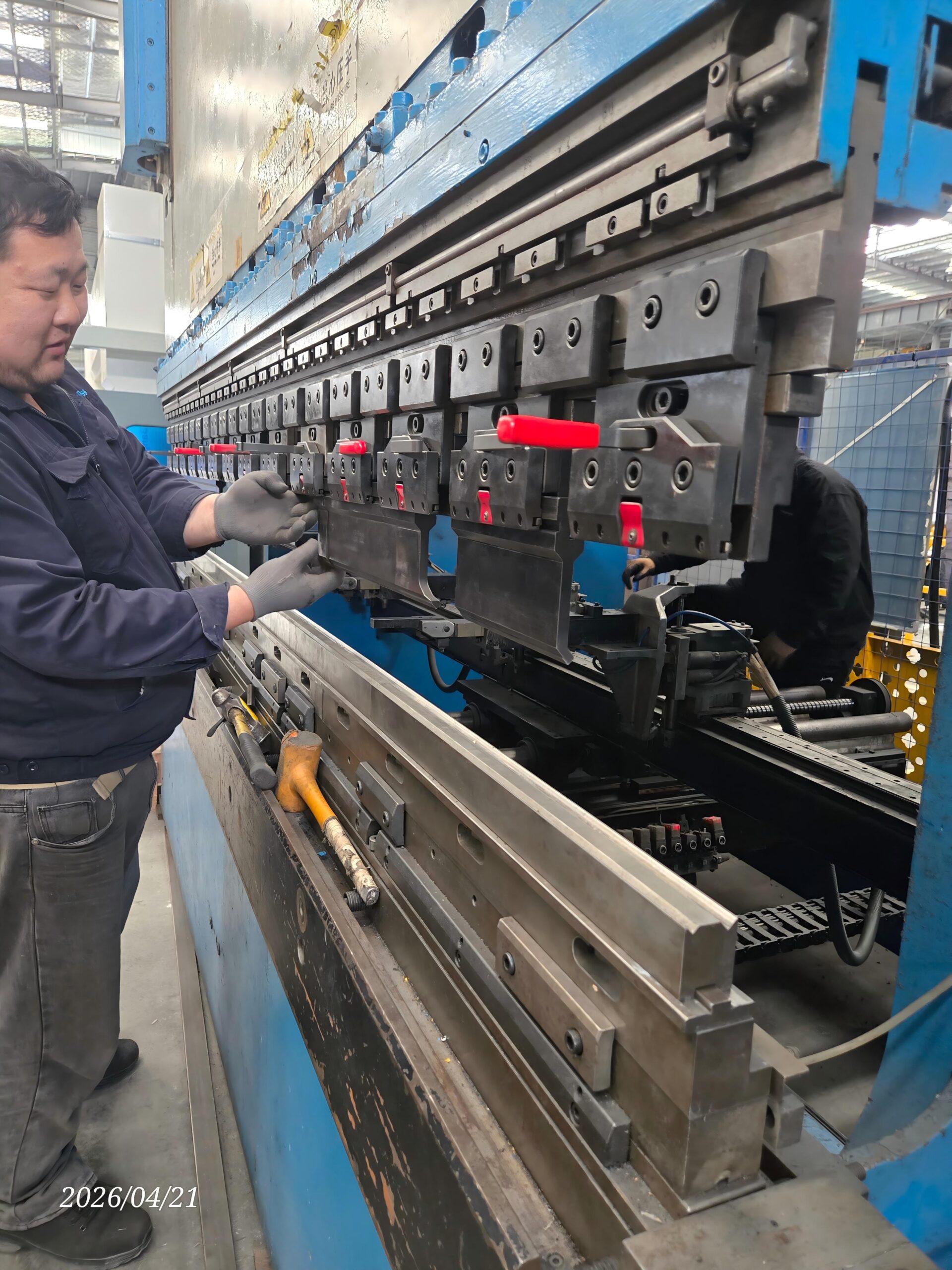
Press brake tonnage calculation is an essential step in selecting the correct CNC press brake and ensuring safe, accurate, and efficient sheet metal bending.
Choosing insufficient bending capacity can prevent a workpiece from being formed correctly or overload the machine and tooling. On the other hand, selecting an unnecessarily large press brake may increase equipment investment without delivering meaningful productivity benefits.
The required bending force depends on several factors, including:
- Material type and tensile strength
- Sheet thickness
- Bending length
- V-die opening width
- Bending method
- Required bend radius
A practical press brake tonnage calculation helps manufacturers estimate the bending force needed for a specific application before selecting equipment.
This guide explains common bending force formulas, provides calculation examples, and highlights mistakes that can lead to incorrect machine sizing.
For final equipment selection, calculated values should always be checked against the press brake manufacturer's capacity charts, tooling load limits, and actual bending conditions.
What Is Press Brake Tonnage Calculation?
Press brake tonnage is the force required to form a sheet metal workpiece using a specific bending method and tooling configuration.
For conventional air bending, the main factors are:
- Material tensile strength
- Sheet thickness
- Bending length
- Lower die V-opening
- Bending method
- Tooling geometry
Material thickness has a particularly strong influence because bending force increases approximately with the square of thickness under otherwise comparable conditions.
This means doubling material thickness can increase the required force by approximately four times when the die opening remains unchanged.
Press Brake Tonnage Formula Explained
A commonly used engineering approximation for air bending is:
F = 1.42 × Rm × L × t² / (1000 × V)
Where:
- F = bending force in kN
- Rm = material tensile strength in N/mm²
- L = bending length in mm
- t = material thickness in mm
- V = lower die opening in mm
The coefficient is an approximation for conventional V-die air bending. Different tooling geometries and calculation methods may use different coefficients.
To convert kilonewtons into metric tons-force:
Metric tons-force = F / 9.80665
This formula provides an initial estimate, not a substitute for a manufacturer's verified bending-force chart.
Press Brake Tonnage Calculation Example
Consider the following application:
| Parameter | Value |
|---|---|
| Material | Mild steel |
| Assumed tensile strength | 450 N/mm² |
| Thickness | 3 mm |
| Bending length | 3,000 mm |
| V-die opening | 24 mm |
| Bending method | Air bending |
Using the formula:
F = 1.42 × 450 × 3000 × 3² / (1000 × 24)
Calculated force ≈ 719 kN, or 73.3 metric tons-force.
This is the estimated bending force for the stated conditions. It does not mean that every 3 mm mild steel application requires the same tonnage.
A different material grade, die opening, bend length, or tooling configuration will change the result.
The machine must also have sufficient usable capacity for the selected tooling arrangement and loading position.
How Does Material Thickness Affect Force?
Using the same material, bending length, and V-opening, increasing thickness has a substantial effect.
For example, increasing thickness from 3 mm to 4 mm gives:
(4 / 3)² ≈ 1.78
The theoretical bending force therefore increases by approximately 78%, assuming the same V-opening remains suitable.
In practice, thicker material often requires a larger die opening, which changes the actual force requirement.
This is why buyers should never calculate capacity from thickness alone.
How Does the V-Die Opening Affect Tonnage?
For the same material, thickness, and bending length, a larger V-opening generally reduces the force required for air bending.
However, a larger opening also affects the resulting inside bend radius and minimum flange length.
For example, changing from a 24 mm opening to a 32 mm opening reduces the calculated force to approximately 75% of the original value, assuming the other formula conditions remain valid.
The larger opening may not be acceptable if the part requires a smaller inside radius or shorter flange.
Tooling selection is therefore a balance between force, geometry, and part quality.
Stainless Steel and High-Strength Materials
A common mistake is calculating force for every material using mild steel assumptions.
Stainless steel and high-strength steels may have significantly different tensile strengths.
For the same thickness and geometry, a material with higher tensile strength generally requires greater bending force.
However, tensile strength alone does not determine the complete bending result. Springback, ductility, grain direction, and minimum bend radius must also be considered.
Manufacturers should use the actual material grade and supplier data whenever possible.
Air Bending vs. Bottom Bending
The formula above is intended for air bending.
Bottom bending generally requires greater force, while coining can require substantially more.
Applying an air-bending calculation to a bottoming or coining operation may seriously underestimate the required capacity.
Always identify the bending method before calculating tonnage.
Five Common Tonnage Calculation Mistakes
- Using nominal material thickness without considering tolerance.
- Assuming every steel grade has the same tensile strength.
- Ignoring the relationship between V-opening and bending force.
- Selecting a machine based only on total rated tonnage.
- Forgetting tooling load limits, off-center loading, and bending length.
Machine ratings must be checked against the manufacturer's specifications, including permissible loading distribution and tooling capacity.
What Should Buyers Check Before Selecting a Press Brake?
Prepare representative drawings showing the longest bend, thickest material, highest-strength material, and most demanding flange geometry.
Ask the equipment supplier to confirm the required bending force, suitable tooling, machine capacity, and any special loading limitations.
At KLD Machinery, press brake selection begins with the actual workpiece and production requirements rather than tonnage alone. Correct capacity planning helps manufacturers balance bending capability, flexibility, and investment.
Choosing a Press Brake Based on Actual Bending Requirements
Press brake tonnage calculation should be treated as the starting point of equipment selection rather than the only deciding factor.
Manufacturers should also evaluate the machine's working length, load distribution, frame rigidity, crowning system, tooling compatibility, and intended production volume.
A press brake rated for a particular nominal tonnage may have additional limitations for concentrated loads or specific bending lengths.
KLD Machinery offers CNC press brake configurations for different sheet metal manufacturing requirements. Buyers can provide material specifications, bending lengths, thicknesses, and representative part drawings for a more application-specific equipment assessment.Frequently Asked Questions
How many tons are needed to bend 3 mm steel?
There is no single answer. The required force depends on bending length, material strength, die opening, and bending method. A 3,000 mm bend in the example above requires approximately 73 metric tons-force.
Does a larger V-die reduce bending force?
Generally yes for air bending, but it also changes the bend radius and minimum flange requirements.
Can a 100-ton press brake bend any part requiring less than 100 tons?
Not necessarily. Tooling limits, load distribution, machine geometry, and operating restrictions must also be checked.
Is the tonnage formula accurate for stainless steel?
It can provide an estimate when an appropriate tensile-strength value is used, but final selection should be verified against material and tooling data.
Conclusion
Press brake tonnage calculation is a starting point for machine selection, not the entire decision.
The correct approach combines material properties, part geometry, tooling selection, bending method, and machine limitations. Understanding these relationships helps manufacturers select equipment that is capable, economical, and appropriate for their production needs.
For More Details, Consult Your KLD Sheet Metal Solution Experts
We help you deliver the quality and value required for sheet metal processing equipment.
Consult Our Experts →