Increasing Sheet Metal Bending Output with Automation
From Less Than 200 to Approximately 435 Parts in 8 Hours
For manufacturers with repetitive sheet metal production, increasing capacity does not always mean purchasing another machine.
Sometimes the biggest opportunity is improving the utilization of the existing bending process.
A KLD customer producing 1,200 mm square perforated panels provides a practical example.
The Original Production Capacity
The customer used a manual four-side bending process.
According to the production records, the factory could produce less than 200 panels during an 8-hour working day.
The manual process involved two operators and required repeated material handling and repositioning.
Automated Production
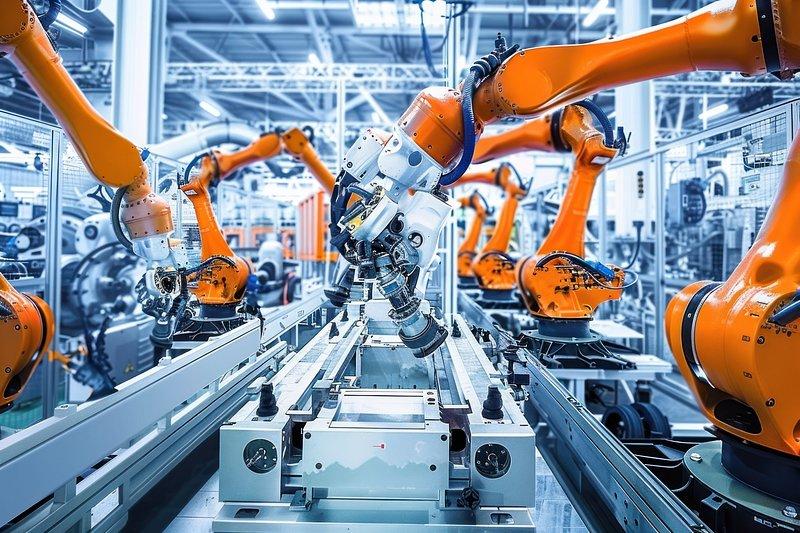
KLD developed an automated bending cell combining:
- CNC press brake
- Robot
- Automatic positioning
- Material handling
- Safety system
The automated process achieved a cycle time of approximately 66 seconds per panel.
Under the customer’s recorded production conditions, the system reached approximately:
435 panels in 8 hours
This is more than twice the previous recorded output of less than 200 panels.
Why Did Output Increase?
The increase was not created by the press brake alone.
The automated system reduced several time-consuming activities surrounding the actual bending operation.
The production sequence became:
Material Loading → Automatic Positioning → Robotic Bending → Finished Part Handling
Instead of stopping between bending operations for manual repositioning, the system maintains a continuous automated workflow.
What About 24-Hour Production?
The customer’s production analysis also estimated a capacity of approximately 1,300 panels over 24 hours under the tested automated production conditions.
This should be understood as a production reference under specific application conditions, rather than a universal output figure for every robotic bending cell.
Actual production capacity depends on:
- Part geometry
- Material
- Bending sequence
- Loading method
- Robot movement
- Machine configuration
- Production scheduling
Why This Matters to Manufacturers
For a manufacturer with increasing orders, additional capacity can sometimes be created by improving process efficiency before adding another production line.
Automation can help manufacturers:
- Increase available production hours
- Reduce manual handling
- Improve process consistency
- Increase output per operator
- Prepare for future production growth
The Key Takeaway
Production capacity should always be evaluated at the system level.
A faster machine does not necessarily create a faster factory.
The biggest gains can come from connecting the entire process into one continuous workflow.
KLD Machinery develops automated bending solutions designed around real production capacity requirements.